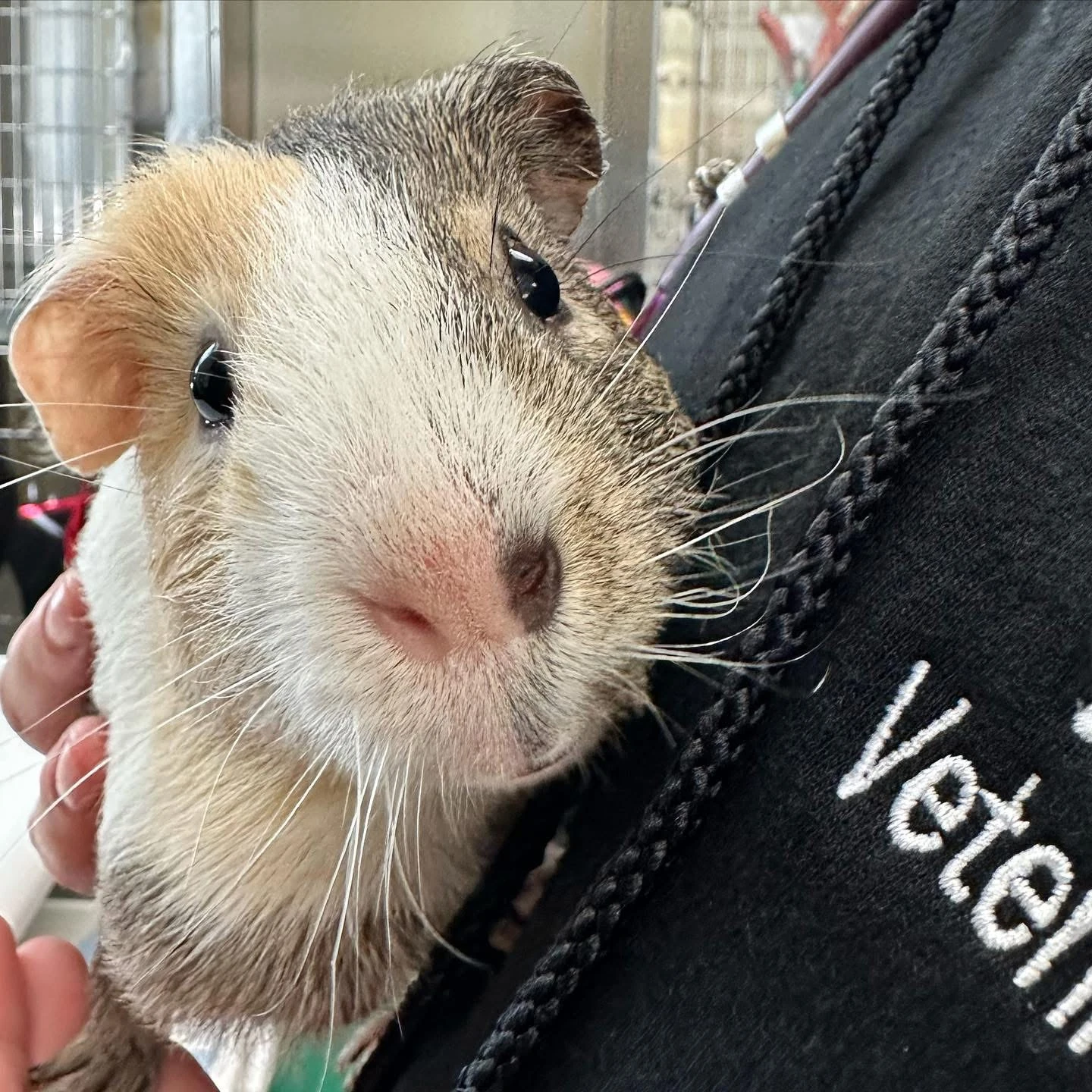
Guinea pigs are easy to love. They are social, expressive, and remarkably communicative—until something is wrong. When a guinea pig becomes ill, the signs can be so subtle that owners miss them entirely until the animal is in real distress. This is not because guinea pig owners are inattentive. It is because guinea pigs are prey animals, and masking weakness is hardwired into their behavior.
At West Concord Animal Clinic, we see guinea pigs and other small mammals from throughout Concord, Carlisle, Acton, Bedford, Sudbury, and Lincoln. One of the most important things we can share with guinea pig owners is this: changes that seem small often are not. And the faster a sick guinea pig receives care, the better the outcome tends to be.
This guide covers the health issues we most commonly see in guinea pigs, the early signs that are easiest to miss, and when to call us.
Why Guinea Pigs Need an Exotic Pet Veterinarian
Guinea pigs are classified as exotic pets in veterinary medicine—not because they are rare, but because their anatomy, physiology, and disease patterns are genuinely different from those of dogs and cats. A veterinarian without experience treating small mammals may not recognize the subtle signs that distinguish normal variation from early illness.
At West Concord Animal Clinic, our team has experience with exotic species including guinea pigs, rabbits, and other small mammals. We understand their specific needs and use protocols appropriate for their size, metabolism, and stress responses.
The 6-Hour Rule for Guinea Pigs
Here is a guideline we share with all of our guinea pig clients: if a guinea pig stops eating or stops producing droppings, 6 hours is roughly how long you have before this becomes a medical emergency.
Guinea pigs have extremely active digestive systems. Unlike dogs and cats, they cannot go without food for extended periods without serious consequences. A guinea pig who has stopped eating—even if they appear otherwise alert—is often in significant distress and may be experiencing GI stasis (a dangerous slowdown of the digestive system) or another condition requiring immediate attention.
This is the single most important thing guinea pig owners can know.
Common Health Problems in Guinea Pigs
1. Dental Disease
Guinea pig teeth grow continuously throughout their lives. This includes both the visible front incisors and the back cheek teeth (molars) that cannot be seen without specialized equipment. When teeth do not wear properly—often due to diet—they can become overgrown, develop sharp spurs, or grow at abnormal angles.
The earliest signs of dental problems are often quiet ones:
- Eating more slowly than usual or preferring softer foods’),
- Dropping food while chewing (called ‘quidding’)
- Weight loss over days or weeks
- Wet fur around the chin or lower jaw (from drooling)
- Smaller or less frequent droppings (because eating less)
By the time a guinea pig is clearly struggling to eat, dental disease is often significantly advanced. Routine wellness exams allow us to catch these changes early, and a diet high in timothy hay—which requires extensive chewing—is the most important preventive measure available.
When dental treatment is needed, we use appropriate sedation and specialized instruments. Guinea pig dental care is not the same as canine or feline dental care and requires different training and tools.
2. Vitamin C Deficiency (Scurvy)
Guinea pigs are one of the very few mammals (along with humans and a handful of others) that cannot synthesize their own vitamin C. They must get it entirely from their diet. When they do not get enough, scurvy develops—and it progresses quickly.
Early signs include:
- Reluctance to move or a subtle stiffness in the joints’),
- A coat that looks duller or more disheveled than usual
- Slight sensitivity when handled, particularly around the limbs
- Mild decrease in appetite
Without treatment, scurvy progresses to weakness, difficulty walking, bleeding from the gums, and poor wound healing.
The solution is straightforward: fresh vegetables high in vitamin C, particularly red and green bell peppers and leafy greens like romaine and parsley. Many guinea pig pellets contain vitamin C, but it degrades quickly after the bag is opened. Fresh vegetables remain the most reliable source. Vitamin C supplements added to water are generally not recommended because vitamin C is unstable and breaks down rapidly in water.
3. Respiratory Infections
Guinea pigs are susceptible to upper respiratory infections, and these can escalate quickly in small animals. Bacteria and viruses can affect the lungs as well as the upper airways.
Watch for:
- Sneezing more than occasionally’),
- Any nasal discharge, particularly if yellow or thick
- Eye discharge or crustiness
- Labored breathing or a clicking sound when breathing
- Reduced activity and appetite
A respiratory infection that might be mild in a larger animal can become serious in a guinea pig within 24 to 48 hours. If you notice these signs, contact us promptly—do not wait to see if it improves on its own.
4. Urinary Problems and Bladder Stones
Bladder sludge and bladder stones (uroliths) are relatively common in guinea pigs. These can be extremely painful and require veterinary diagnosis and treatment.
Signs include:
- Straining when urinating or making small vocalizations during urination’),
- Blood in the urine (the bedding may appear pink or red)
- Decreased urine output
- Hunched posture, particularly after urination
- Reluctance to move
Diagnosis usually involves X-rays. Some cases can be managed with dietary changes and increased hydration; others require surgical removal of stones. Early detection makes a meaningful difference in treatment complexity and outcome.
5. Skin Conditions and Parasites
Guinea pigs can develop fungal infections, mange mites, and other skin conditions. Mange mites in particular can cause intense itching and distress—sometimes so severe that the animal injures itself through scratching.
Signs include:
- Excessive scratching, particularly along the back and neck’),
- Hair loss in patches
- Crusty, flaky, or thickened skin
- Red or irritated skin
These conditions are treatable, but they need accurate diagnosis. Some skin conditions can look similar to one another but require different treatments. Self-treating without knowing what you are dealing with is generally not effective.
6. GI Stasis
Gastrointestinal stasis—when the digestive system slows down significantly or stops—is one of the most serious emergencies in guinea pigs. It can result from a number of triggers including stress, dietary changes, dental pain, or illness.
The clearest early sign is a reduction in droppings. Normal guinea pig droppings are regular, plentiful, and consistent. Any decrease in output warrants attention. No droppings at all is an emergency.
Other signs include a bloated-feeling abdomen, refusal to eat, and quieter-than-usual behavior. If you suspect GI stasis, call us immediately—do not wait to see if it resolves.
How Often Should Guinea Pigs See a Veterinarian?
For most adult guinea pigs, we recommend a wellness exam once a year. Guinea pigs over four years old—considered senior—benefit from exams every six months, as health changes can occur more quickly in older animals.
New guinea pigs should be seen within the first few weeks of coming home, ideally with a fecal sample for parasite screening. This initial visit establishes a baseline and gives us the chance to address any concerns early.
What to Watch for at Home
Because guinea pigs hide illness, daily observation is your most important tool. Build a brief daily check into your routine:
- Watch your guinea pig eat. Are they approaching food with their usual enthusiasm?’),
- Look at the bedding. Are there the usual number of droppings?
- Hold your guinea pig briefly. Has their weight changed? Do they feel lighter?
- Run your hands gently along the body. Any new lumps, areas of hair loss, or sensitive spots?
- Listen when they vocalize. Any unusual sounds, particularly when urinating?
If you notice something that does not seem right, trust that instinct. Guinea pig owners often know their animals well enough to detect changes before they become obvious. We would rather help you investigate a concern that turns out to be nothing than have you wait on something serious.
Preventive Care That Makes a Real Difference
The two most impactful things guinea pig owners can do for their pet’s long-term health are:
- Feed an appropriate diet with unlimited timothy hay as the foundation, supplemented with daily fresh vegetables and a small amount of quality pellets
- Schedule routine wellness exams so that we can monitor weight, dental health, and overall condition before problems become emergencies
Diet is genuinely the cornerstone of guinea pig health. A hay-based diet supports healthy teeth, keeps the digestive system moving, and provides the fiber these animals require. A diet heavy in pellets or fruit—even a well-intentioned one—can contribute to dental overgrowth and digestive problems over time.
Frequently Asked Questions
Do guinea pigs need vaccines?
No. Unlike dogs, cats, and ferrets, guinea pigs do not require routine vaccinations. Preventive care focuses on nutrition, habitat, dental health, and regular wellness exams.
What is a normal weight for a guinea pig?
Most adult guinea pigs weigh between 700 and 1200 grams, though this varies by sex and breed. More important than the number is the trend—consistent, gradual weight loss is often the first indicator of a health problem. A kitchen scale and weekly weigh-ins are a genuinely useful tool for guinea pig owners.
How long do guinea pigs live?
With appropriate diet, housing, and veterinary care, guinea pigs typically live four to seven years. Some live longer. Health issues become more common in the final one to two years of life, making senior wellness exams particularly valuable.
Can guinea pigs get sick from people?
Certain respiratory illnesses can potentially be transmitted from humans to guinea pigs. If you are ill with a cold or respiratory infection, minimize direct contact with your guinea pig and wash hands thoroughly before and after handling.
What food should guinea pigs avoid?
Avoid iceberg lettuce (low nutritional value), potatoes, onions, leeks, garlic, rhubarb, and anything high in sugar or carbohydrates. Fruits should be given sparingly due to their sugar content. If you are unsure about a food, it is worth asking us before offering it.
Schedule a Guinea Pig Wellness Visit
Whether your guinea pig is new to your home or a longtime companion who is due for a checkup, we are here to help. West Concord Animal Clinic provides wellness exams, dental evaluations, diagnostics, and treatment for guinea pigs and other small mammals at 29 Domino Drive in Concord, MA.
We serve families throughout Concord, Carlisle, Acton, Bedford, Sudbury, and Lincoln. Contact us to schedule an appointment—we would be glad to meet your guinea pig and partner with you on their care.